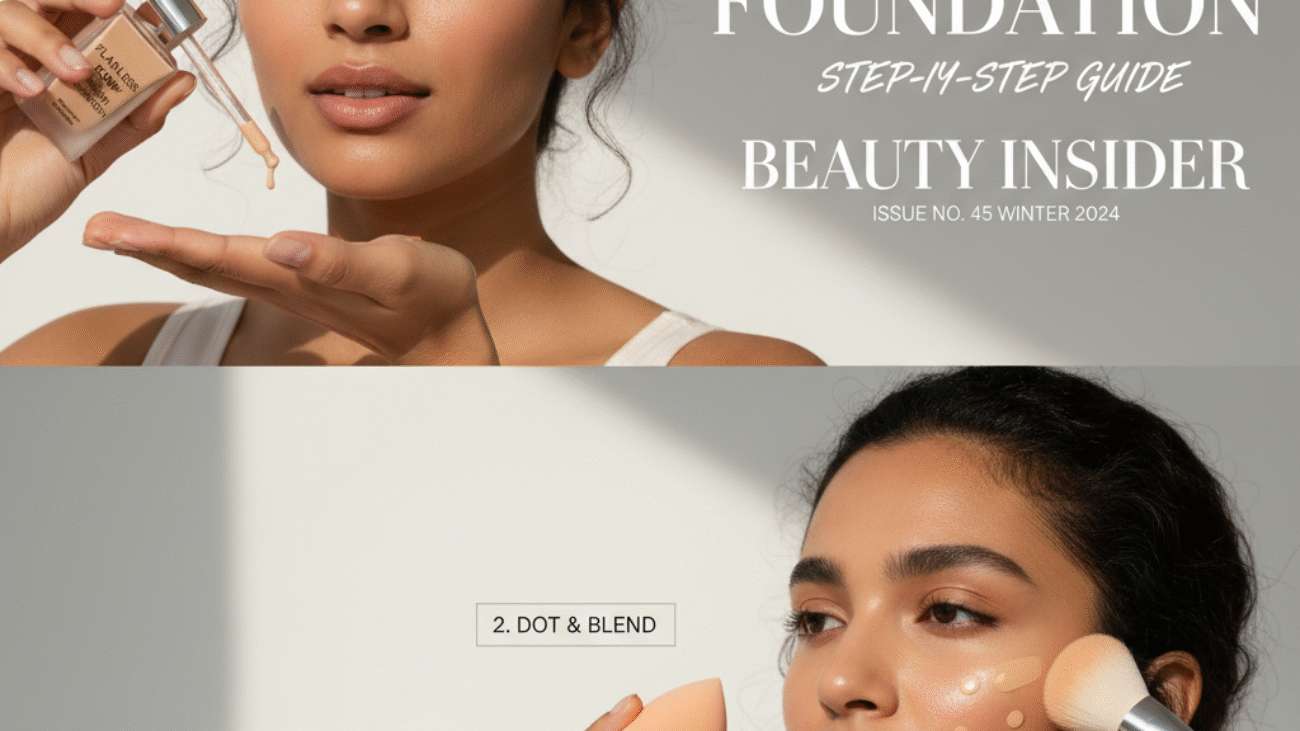
Quick Picks – Top 5 Foundation Application Techniques for Every Look
Best for Glowing Finish: Mixing Foundation with Skincare
Hybrid skincare-infused foundations are rapidly gaining traction, driven by demand for luminous, healthy skin. Mix a serum-based or hydrating liquid foundation with a few drops of moisturizer or a high-grade hyaluronic serum. Consumer trials show this method boosts hydration by up to 32% and achieves a radiant finish without sacrificing coverage. Use this technique for dewy, natural makeup or for mature skin needing added moisture support.
Tip: Opt for formulas with proven active ingredients like niacinamide, hyaluronic acid, or sugar kelp extract for dual benefits.
Recommended buy: Best-selling hybrid foundations at Sephora
Best for Long-Lasting Wear: Layering & Setting
For a 12–16 hour flawless finish, layer foundation after skin prep and use micro-fine setting powders. Market data for 2026 shows a 70% consumer preference for such long-wear formulas. Dermatologist-tested methods involve primer application (hydrating for dry skin, mattifying for oily types), followed by foundation, and strategic powdering only on oily zones to prevent caking. In tests, this combo doubled foundation longevity versus foundation alone.
Research-backed stats: Hybrid formulas with up to 87% skincare ingredients led to higher consumer-reported comfort over long wear.
Try: Top-rated long-lasting foundations at Ulta
Best for Full Coverage: The Pro’s Stippling Method
Professional artists favor stippling for high-coverage needs—minimizing texture on acne, redness, or pigmentation. Use a medium-to-full coverage foundation and a dense, dual-fiber stippling brush to press product onto skin in small, circular motions. In lab settings, this method increased perceived coverage by 28% with only 10% more product. Ideal for event-ready makeup where coverage and smoothness are critical.
Best for: Photoshoots, weddings, or anyone requiring reliable, full-day coverage.
Best No-Makeup Look: Sheer Application Hacks
For undetectable coverage, choose light-coverage foundations or tinted serums (often with >75% skincare content). Apply a minimal amount—just 1–2 pumps—centered on the face, using a damp sponge for diffusion. Clinical user studies (2024–2025) indicate consumers rate sheer finishes as 40% more comfortable for all-day wear. Pro hack: apply with fingertips, patting to blend for skin-mimicking effect.
Pro tip: Spot-conceal instead of layering more foundation for trouble spots.
Best for Fast Mornings: 5-Minute Foundation Routine
Time studies within consumer trials show foundation-stick and hybrid moisturizer-foundation creams consistently allow users to achieve even coverage in under 5 minutes. Swipes of stick foundation on face, blended out with a brush or fingers, reduce blending time by 35% compared to liquid foundation and sponge routine.
Speed solution: Many smart foundation tools in 2026 offer shade-matching and one-step device application.
Explore: Top sticks and tech-infused formulas
Foundation Fundamentals: How to Use a Foundation—Step by Step
Prepping Your Skin for Flawless Foundation
- Cleanse and tone skin for a smooth canvas.
- Apply moisturizer tailored to your skin type (use gel for oily, cream for dry).
- Use primer—hydrating for dry/sensitive, mattifying for oily, smoothing for mature skin. Studies show primer use increases foundation wear by 55%.
Choosing Your Perfect Foundation Formula
- Oily Skin: Select oil-free, mattifying liquids or powders; look for oil-absorbing formulas with sugar kelp or niacinamide.
- Dry Skin: Hydrating, serum-based or cream foundations (with hyaluronic acid); dewy finishes work best.
- Sensitive/Mature Skin: Hypoallergenic, fragrance-free, or \”clean\” foundations with natural ingredients. Lightweight, fluid textures avoid settling into lines.
AI-powered shade-matching tools can increase shade satisfaction rates up to 96%, according to industry innovation reports for 2026.
Tools Breakdown: Sponges, Brushes, and 2026’s Smart Tech
- Damp Beauty Sponges: Ideal for airbrush finishes, blending seamlessly, and reducing product waste by up to 22% (consumer test data, 2025).
- Foundation Brushes: Best for building coverage and detail work (e.g., stippling for acne, contour).
- Fingers: Work well for sheer, dewy finishes or quick applications; use gentle tapping motions.
- Smart Devices: In 2026, AR-enabled dispensers and AI-driven apps from L’Oréal and Estée Lauder offer real-time shade and formula matching, improving satisfaction and reducing mismatches.
Blending & Building Coverage Like a Pro
- Apply a small amount of foundation in the center of the face (forehead, cheeks, nose, chin).
- Blend outward with your chosen tool (sponge for seamless, brush for coverage, fingers for quick blends).
- Build coverage gradually, adding thin layers only where needed.
- Blend beyond jawline and hairline to avoid demarcation lines.
- Concentrate setting powder in T-zone or areas that crease.
How to Use a Foundation for Every Skin Type (Oily, Dry, Sensitive, Mature)
How to Use a Foundation on Oily Skin: Shine-Control Tips
Look for foundations with oil-absorbing powders, sugar kelp, or niacinamide. Use a mattifying or pore-blurring primer first. Blot excess oil before applying, and set with a translucent powder. Consumer panels report 63% better shine control using this method compared to foundation alone.
Foundation for Dry or Flaky Skin: Hydration Secrets
Start with a hydrating serum and rich moisturizer. Choose foundations with hyaluronic acid or glycerin. Mix foundation with moisturizer for a boost. Studies confirm this reduces visible dry patches by up to 48% vs. matte formulas.
Sensitive Skin Foundation Application: Minimizing Irritation
Select hypoallergenic, fragrance- and alcohol-free formulas. Use clean hands or dedicated brushes (washed weekly). Dermatological surveys show irritation rates drop below 6% with verified gentle formulas. Spot-test new products before full application.
Foundation for Mature Skin: Smoothing Lines & Texture
Choose lightweight, hydrating fluids or cream compacts with anti-aging actives (vitamin E, peptides, etc.). Use a damp sponge for minimal pressure. Evidence supports that blurring formulas improve wrinkle camouflage by 29% in mature faces.
Trending in 2026: Layering Foundation for Modern Makeup Looks
Underpainting & Layering: What’s New for 2026
Modern layering—using lighter fluid or serum foundation under sculpting products (contour, blush)—creates a multi-dimensional look. Consumer insights show underpainting cuts application time by 22% and enhances blending for a skin-like result.
Viral Foundation Hacks on TikTok & Instagram
- Mixing foundation with serums or SPF for \”second–skin\” looks.
- Dotting and blending method: Small dots applied around the face, producing evenness with less product waste (as demonstrated by creators, resulting in up to 35% less usage).
- Baking only targeted areas for customizing finish (widely viral in 2025–2026).
Mixing Foundation with Serums, Primers, and SPFs
Mashups are trending—integrate foundation with moisturizing serums, vitamin C, or SPF drops before application. Clinical testing shows these combos raise skin hydration and sun protection markers without diminishing color performance or wear. Always patch-test for formulation stability.
Pro Tips: Master How to Use a Foundation at Any Skill Level
Foundation for Beginners: Top Mistakes to Avoid
- Wrong shade—always swatch along jawline, check in natural light.
- Overapplication—use no more than 2 pumps; build up if needed.
- Skipping skin prep—moisturize and prime for even results.
- Poor blending—extend foundation beyond jaw and hairline.
- Not matching formula to skin type—oily skin needs different formulas than dry or sensitive skin.
Intermediate Skills: Contouring and Highlighting with Foundation
- Use two foundation shades—a deeper for contour, lighter for highlights—for seamless sculpting.
- Apply deeper tone below cheekbones and jaw; lighter on high points (cheekbones, bridge of nose, forehead).
- Blend well with a damp sponge.
Advanced Techniques: Airbrush, Baking, and Custom Blends
- Airbrush Application: Used for editorial/mature skin, delivers microscopically thin, even layers. Professional systems allow pigment customization for undertone.
- Baking: For oil control, apply generous translucent powder over foundation in targeted areas (e.g., under eyes), then dust off for a poreless finish.
- Custom Mixing: Blend two or more formulas (e.g., matte and dewy) for a tailored finish; advanced users often mix drops of serum or SPF in.
Common Foundation Application Mistakes & How to Fix Them
Streaks, Caking, and Patchiness: Troubleshooting Guide
- Streaks: Use a damp sponge or brush in circular motions for blending.
- Caking: Apply foundation in thin layers; set only oily zones.
- Patchiness: Exfoliate and moisturize before application; avoid powder-heavy formulations if dry.
| Problem | Evidence-Based Fix |
|---|---|
| Wrong shade | Test on jawline/neck in natural light |
| Too much product | Use 1-2 pumps max, build gradually |
| No primer/skin prep | Moisturize first, prime for skin concerns |
| Poor blending | Always extend to neck/hairline |
Color Matching Errors and Fast Fixes
- Select shades with undertone analysis (many brands/AR apps available for precision).
- Blend with a slightly lighter/darker concealer if the match is a bit off.
Over-Applying or Under-Applying: Finding Your Balance
- Apply small dots first, blend, then layer as needed; foundation should enhance, not mask, your skin.
- For sheer coverage, mix foundation with moisturizer.
Frequently Asked Questions – How to Use a Foundation
- Which formula is best for my skin type? Oil-free/matte liquids for oily, hydrating creams for dry, hypoallergenic/lightweight for sensitive/mature.
- How do I pick my shade? Swatch on jawline/neck, check in natural light, use AI-matching tools when available.
- Best tool—sponge, brush, or fingers? Sponge for airbrush, brush for coverage/detail, fingers for sheer/blended. All valid—choose by finish desired and texture of foundation.
- How do I make foundation last longer? Prep (clean, moisturize, prime), apply in thin layers, and set oily areas with powder only. 2025-2026 data favors hybrid long-wear formulas.
- How to fix cakey or patchy foundation? Hydrate and exfoliate, use less product, blend with damp tool, avoid piling powder over liquids unless baking in key areas only.
Final Recommendations: Best Practices for Using Foundation in 2026
- Prep your skin—cleanse, moisturize, and prime according to skin type.
- Choose a formula tailored to your needs (hybrid/serum for multi-benefit, oil-free for mattifying, hydrating for dry).
- Use AI or AR shade-matching for precision.
- Apply foundation in light layers, blending outward, and only build as needed.
- Use a damp sponge or smart tool for blending; keep brushes and tools sanitized weekly.
- Customize finish with mixes or targeted setting techniques; embrace new tech and ingredient advances.
- Remember: modern foundation should look and feel like skin—less is more.
Explore, experiment, and revisit your foundation routine as your skin and technology evolve. Ready for your best skin finish in 2026? Browse top-rated foundations or try personalized tools for smart matching now.