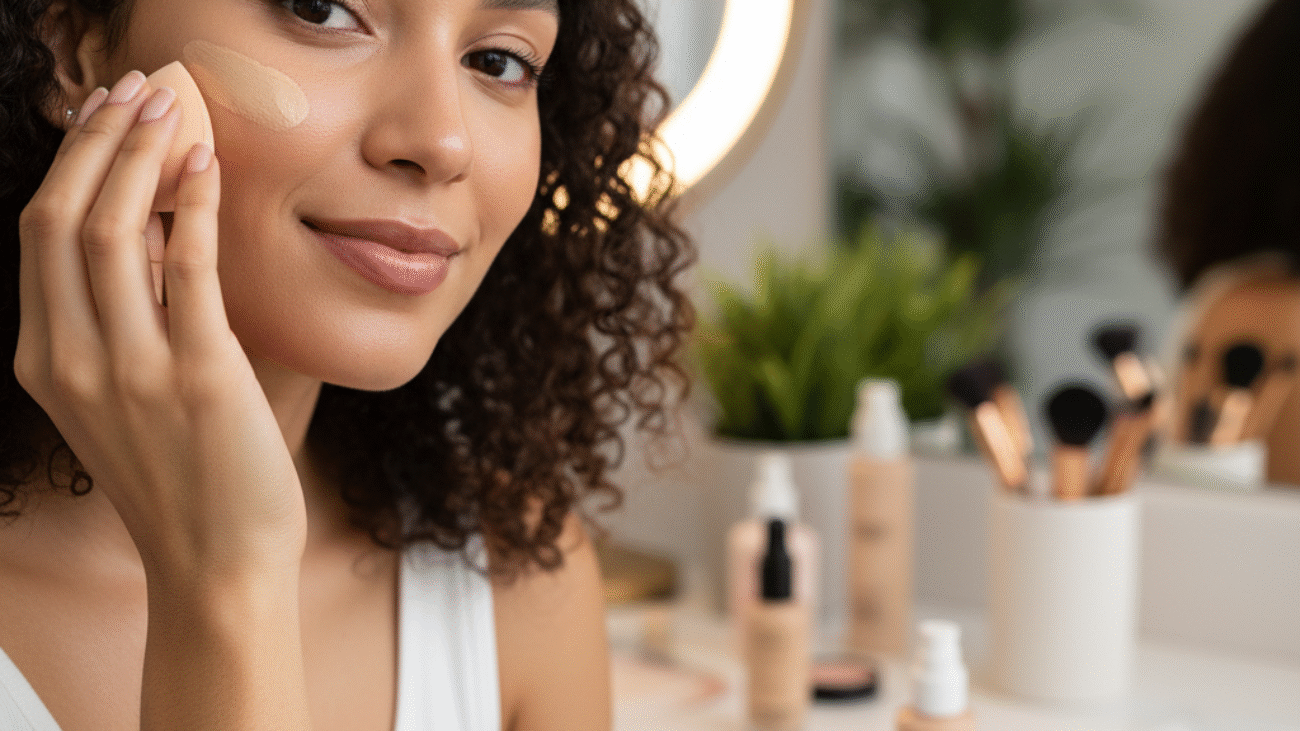
Essential Preparations Before Applying Foundation
1. Cleansing and Hydrating Your Skin
Before applying foundation, it is crucial to start with a clean face. Wash your face gently with a mild cleanser suitable for your skin type. This removes oil, dirt, and leftover makeup, helping your foundation last longer and look smoother. After cleansing, apply a lightweight moisturizer. Hydrated skin ensures the foundation applies evenly and prevents flakiness.
2. Choosing the Right Primer for Your Skin Type
Primer is a key step for flawless makeup. It creates a smooth surface and helps your foundation stay in place all day. Choose a primer that matches your skin type:
- For oily skin: Use a mattifying primer to control shine.
- For dry skin: Choose a hydrating primer to prevent dryness.
- For combination skin: Apply mattifying primer on oily areas (like the T-zone) and hydrating primer on dry areas.
- For sensitive skin: Look for fragrance-free and calming primers.
Wait a minute after application before moving to the next step.
Understanding Foundation Types and Picking the Perfect Match
3. Liquid, Powder, Cream, and Stick Foundations Explained
- Liquid Foundation: Good for most skin types. Offers buildable coverage and different finishes (dewy, matte, natural).
- Powder Foundation: Best for oily or combination skin. Quick to apply but can look cakey on dry skin.
- Cream Foundation: Works well for dry or mature skin. Gives fuller coverage and a luminous finish.
- Stick Foundation: Handy for travel and touch-ups. Easy to target specific spots but requires blending.
4. How to Select Your Ideal Shade and Undertone in 2026
Choose a foundation shade that matches your jawline and blends seamlessly into your neck. To find your undertone:
- Cool Undertones: Pink, red, or bluish hues. Silver jewelry looks best.
- Warm Undertones: Yellow, golden, or peachy hues. Gold jewelry suits you.
- Neutral Undertones: A mix of both. Both silver and gold jewelry look good.
Test foundation shades in natural daylight for best results.
5. New Trends: AI Shade-Matching and Sustainable Formulas
In 2026, many brands offer AI-powered shade-matching tools. You can scan your face with your phone and get a personalized shade recommendation instantly. Look for sustainable foundation formulas made with eco-friendly ingredients and packaging to reduce environmental impact.
Step-by-Step Guide: How to Apply Foundation for Different Skin Types
6. Application Techniques for Oily, Dry, Combination, and Sensitive Skin
- Oily Skin: Use a mattifying primer and oil-free foundation. Apply thin layers with a dense brush or sponge. Lightly set with an oil-absorbing powder.
- Dry Skin: Use a hydrating primer and creamy foundation. Blend with a damp makeup sponge for extra moisture. Avoid powder products on dry patches.
- Combination Skin: Use split-priming techniques. Apply foundation lightly, building coverage where needed. Set only the oily parts with powder.
- Sensitive Skin: Choose fragrance-free and hypoallergenic products. Use clean brushes or sponges to prevent irritation. Test products before full-face use.
7. Adapting Foundation Application for Diverse Skin Tones
For deeper skin tones, avoid foundations that leave a grayish cast. Choose brands with extensive shade ranges. For lighter skin, check that formulas do not oxidize to a darker shade. Blend foundation well into the hairline, ears, and jawline to avoid harsh lines.
Tools of the Trade: Brushes, Sponges, and Innovative Tools in 2026
8. Pros and Cons of Popular Application Tools
| Tool | Pros | Cons |
|---|---|---|
| Brush | Fast application, full coverage, easy blending | Can leave streaks if not used properly |
| Sponge | Gives natural, dewy finish, blends well | Needs to be moistened, absorbs more product |
| Fingers | High control, warms product for better blending | Less hygienic, may leave fingerprints |
| 2026 Tools (AI applicators, brushes with sensors) |
Precision, customized coverage, time-saving | More expensive, new learning curve |
9. Eco-Friendly and Clean Beauty Alternatives
In 2026, eco-friendly brushes and sponges made from recycled or plant-based materials are widely available. Choose cruelty-free and vegan products when possible. Clean beauty foundations avoid harsh chemicals and are better for sensitive skin and the planet.
Expert Tips to Make Foundation Last All Day
10. Setting Techniques and Products
Set foundation with loose or pressed powder if you want a matte, long-lasting finish. Use a light hand to avoid caking. For a dewy look, use minimal powder only where needed (like the T-zone). Setting sprays help lock your makeup in place and refresh your look throughout the day.
11. Layering with Concealer, Powder, and Setting Spray
- Apply concealer after foundation to cover spots or under-eye circles.
- Lightly dust powder to lock in the base but don’t overdo it.
- Finish with a setting spray to prevent makeup from slipping or fading.
12. Customizing Your Finish: Matte, Dewy, and Natural
- For a matte look: Use oil-absorbing products and powder, avoid heavy moisturizers.
- For a dewy look: Use luminous foundation and hydrating products, keep powder minimal.
- For a natural look: Use lightweight, sheer foundation and blend well for an even base.
Troubleshooting: Fixing Common Foundation Mistakes
13. How to Prevent and Fix Caking, Creasing, and Pilling
- Avoid applying too much product at once. Build coverage slowly.
- Use a damp sponge to press foundation into the skin. This reduces caking and helps blending.
- If creasing happens under the eyes, use less product and tap away excess with a sponge.
- To prevent pilling, let each skincare layer absorb before adding another product.
14. Solutions for Oxidation and Color Shifting
- Test foundation wear for a few hours before buying. Some formulas may turn darker as they react with air or skin oils.
- Use a primer to create a barrier and slow oxidation.
- If your foundation looks too orange, try mixing with a lighter, neutral shade.
Inclusivity in Makeup: Tips for All Genders, Skin Tones, and Ages
15. Foundation for Mature Skin: Application and Product Selection
Mature skin needs gentle care. Choose lightweight, hydrating foundations that do not settle into lines. Use a primer designed for smoothing fine lines. Tap on foundation with a sponge for a natural finish.
16. Addressing Acne, Scars, and Textured Skin
For acne-prone skin, use non-comedogenic products. Color-correcting primers can help with redness. For scars or textured skin, apply a pore-filling primer and dab foundation gently for the best coverage. Avoid thick, heavy layers, as they can highlight texture.
Frequently Asked Questions: Foundation Application in 2026
- How much foundation should I use? Start with a small amount, add more if you need extra coverage.
- Can I mix foundations? Yes, mixing foundations can create the perfect shade and texture for your skin.
- How often should I clean my makeup tools? Clean brushes and sponges at least once a week to prevent bacteria and breakouts.
- Is foundation safe for teenagers? Yes, choose gentle, non-comedogenic formulas and always remove makeup before bed.
- How do I remove foundation quickly and safely? Use a gentle cleanser or makeup remover, followed by moisturizer.
Conclusion: Key Points and Next Steps
Applying foundation can be simple if you follow the right steps and choose the correct products. Remember to prep your skin, select the right shade, and use tools that suit your needs. Customize your routine depending on your skin type and desired look. With practice, your foundation will look flawless and last longer. Stay updated with new trends and eco-friendly options in 2026 for the best results. Be confident and have fun exploring makeup!