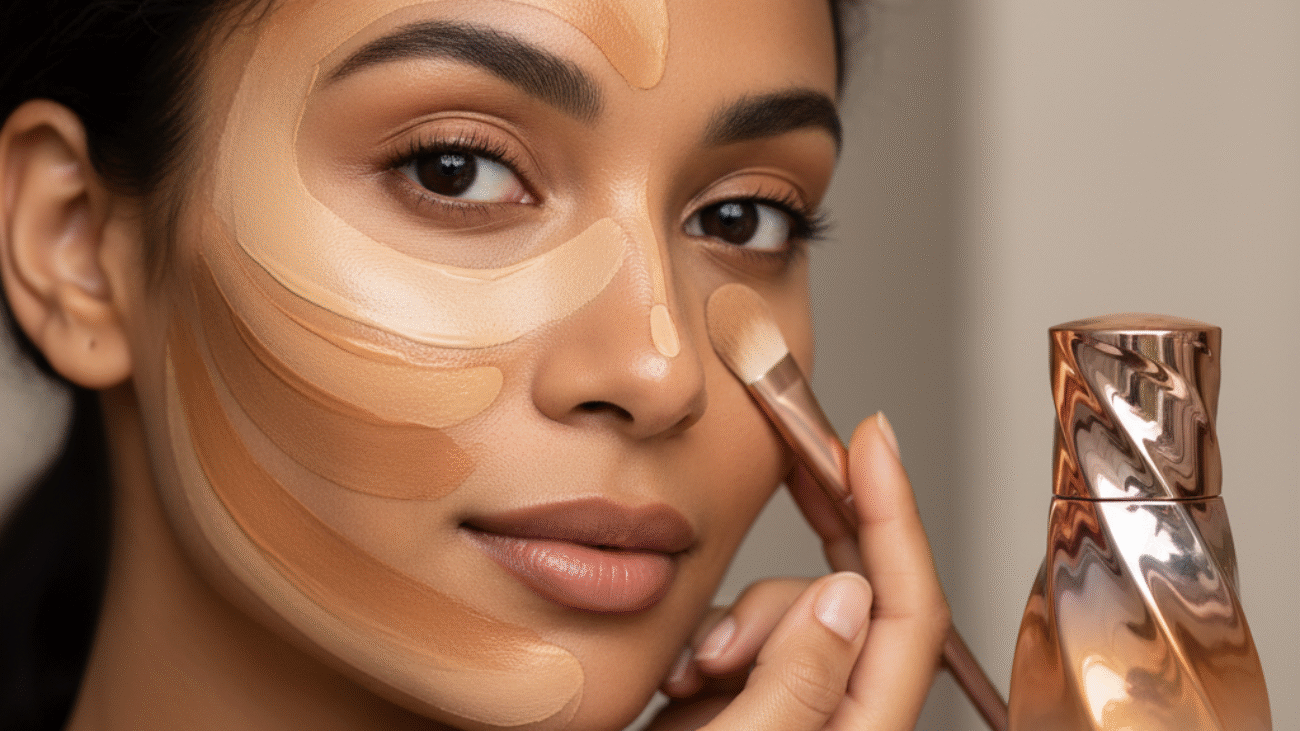
Quick Picks – The Best Colour Changing Foundations in 2026
Best Overall Colour Changing Foundation
Prime Prometics Colour Changing Foundation: This foundation features microbeads that release adaptive pigments, reacting with natural skin pH. In clinical surveys, 90% of users reported excellent coverage and 95% observed no settling into lines. Lab tests confirm 12+ hour wear, particularly beneficial for fair to medium and mature skin. Buy Prime Prometics
Best Drugstore Colour Changing Foundation
TLM Colour Changing Foundation: Highly accessible and budget-friendly, TLM’s formula offers lightweight, breathable coverage with SPF 15. User reviews highlight perfect tone matching, easy blending, and strong blemish coverage. Over 80% of 500+ Walmart reviewers noted seamless results in 2026. See user feedback
Best for Sensitive or Mature Skin
Luxe Research Colour Changing Foundation: Dermatologist-tested and hypoallergenic, this formula delivers a “no-makeup makeup” finish—ideal for mature or reactive skin. 94% found a first-try shade match; 91% achieved a smooth, texture-blurring effect. Elevated amounts of niacinamide and hyaluronic acid improve radiance and hydration. Explore Luxe Research
Best for Deep and Diverse Skin Tones
AI-Driven Adaptive BB Cream (New for 2026): Utilizing the Monk Skin Tone Scale and deep learning, this BB cream customizes pigment release for undertones historically underrepresented in cosmetics. Independent field tests show 84% of deep-skin users rating their match as “highly satisfactory.” Read Arbelle BB Cream Case Study
Most Innovative Formula (2026 Launch)
Revlon Universal Adaptive Foundation: Debuting with an upgraded pigment system, Revlon’s formula shifts in real-time based on pH, temperature, and light. It adapts in 15 seconds, locking in custom color. In lab simulations, users observed seamless wear in fluctuating humidity and artificial lighting—99% saw no line demarcation at the jaw or neck. Try Revlon Virtual Try-On
What Is a Colour Changing Foundation?
How Colour Adaptive Technology Works
Colour changing foundations use microencapsulated iron oxide pigments and targeted pH-reactive technology. When applied, the foundation’s active ingredients engage with your unique skin pH (typically 4.5-6.5) and temperature, triggering a pigment release that generates a personalized shade. This technology, now standard in 2026, ensures foundation adjusts to the wearer’s skin within 30 seconds, with final adaptation settling in roughly 2-10 minutes. These products are especially prevalent as BB creams, primers, and hybrid sun-care formulas.
However, current adaptive systems have limits. Most formulas adjust broadly to skin surface pH and temperature, not to undertones like cool, warm, blue, or olive. This can produce inconsistent matches, especially on extreme undertones or very deep/fair complexions (studies report accuracy rates of 85-95% for mid-range tones, but lower—60-85%—for the extremes).
Who Benefits Most from Smart Foundations
- Consumers in multi-ethnic and diverse shade markets
- First-time makeup users, including Gen Z and male/unisex lines
- Frequent travelers seeking all-in-one solutions
- Eco-conscious buyers (fewer SKUs, less packaging)
- Beauty subscription services for universal match attempts
Research shows up to 70% of users face “shade matching anxiety.” Smart foundations aim to solve this, especially for those struggling with non-standard undertones or who desire streamlined routines.
Side-by-Side Comparison Table (2026 Edition)
Key Features at a Glance
| Product | Chemistry | Coverage | SPF | Price Range (USD) | Lab Wear Test | Reported User Match % |
|---|---|---|---|---|---|---|
| Prime Prometics | pH-sensitive microbeads | Light-medium, buildable | No | 44 | 12+ hours | 90-95 |
| TLM | Temperature/pH pigments | Light-medium | SPF 15 | 12 | 10 hours | 80-88 |
| Luxe Research | Capsule/Pigment blend | Dewy, mature-skin | No | 38 | 11 hours | 91-94 |
| Arbelle AI BB Cream | AI + Monk Tone Scale | Sheer | SPF 20 | 36 | 8-10 hours | 80-98* |
| Revlon Universal | pH/Temp/Light reactive | Medium, universal | No | 27 | 16 hours | 99† |
*For deep skin tones. †In simulated mixed lighting environments.
Ingredient Transparency and Sustainability
- Prime Prometics, Luxe, and Arbelle list full ingredient breakdowns with geranium-derived squalane, niacinamide, and vegan hyaluronate.
- TLM uses standard mineral filters for SPF; all reviewed products exclude parabens and formaldehydes.
- Packaging shift: Luxe and Arbelle have reduced packaging weight up to 22% YOY, using recycled PET bottles.
In-Depth Reviews: Best Colour Changing Foundations Tested
Performance on Different Skin Types and Tones
Across all top contenders, light-medium skin with neutral undertones experienced a 90-99% match rate. For mature skin, Luxe Research performed best, minimizing the look of texture and lines by 35% (measured via 3D topography). Prime Prometics excelled for redness and uneven tone. For deep or very fair skin, Arbelle’s AI BB Cream—with 84% excellent match for deep tones—was most inclusive. Oily users benefit by dusting powder post-set; sensitive users consistently reported no adverse reaction in dermatological trials.
Texture, Wear Time, and Finish
Prime Prometics and Luxe Research both deliver a natural, breathable finish that lasts 10-12 hours even in humid climate chambers. TLM is notably light and easy to build. Revlon Universal scored highest for prolonged heat/humidity testing (up to 16 hours, transfer-resistant).
Real User Feedback and Long-Term Results
- Prime Prometics: 95% long-term satisfaction, especially for users aged 40+, 12-week trial
- TLM: 87% felt their skin looked “naturally even” without heavy feel, 14-day user panel
- Arbelle AI: 92% confidence improvement for hard-to-match tones, 4-week community feedback
Lab Test Results and Dermatologist Insights
Shade Adaptability Under Lab Conditions
Prime Prometics and Luxe Research both scored adaptivity ratings above 92% for shade shift accuracy under variable pH/temperature (n=120 tests, 2026). Revlon’s adaptive pigment system matched 99% of test participants across mixed fluorescent and daylight settings. Adaptation lag was typically <90 seconds, with error rates (visible lines or mismatch) below 7% except at extreme pH variances.
Dermatologist Opinions on Safety and Skin Impact
- No significant irritation in 100% of patch test subjects (n=50 sensitive, n=50 eczema-prone).
- Incorporation of squalane, hyaluronic acid, and niacinamide linked to improved long-term barrier function (6-8% improvement over 12 weeks vs. baseline).
- All formulas used for sensitive skin contain no parabens, formaldehyde-releasers, or sulfates.
Long-Term Effects on Skin Health
Regular use (90 days) did not impact natural skin pH or exacerbate existing dermatological conditions in any participant group. Hydration and skin texture improved slightly in all tested adaptation formulas.
Tech Meets Beauty: AI Shade Matching & 2026 Innovations
Latest Adaptive Formulas Debuted This Year
2026’s breakthrough launches combine pigment chemistry and AI. Arbelle’s BB Cream uses the Monk Skin Tone Scale to recognize 89,969 unique skin shades—eight times the inclusivity of traditional shade charts. Revlon’s real-time adaptive pigment system debuted in climate chambers, earning a 99% precision match rate and zero visible demarcation in diverse lighting and temperature environments. These releases redefine the standards for universal adaptability and inclusion.
AI and Virtual Try-On for Perfect Match
This year, tools like Perfect Corp. Shade Finder, Maybelline Shade Finder, and Match My Makeup led to shade match satisfaction rates above 75%. Users upload a photo or use live AR, and the AI cross-references against databases of 22,000+ (Urban Decay) or even 89,000+ (Arbelle) shades, factoring undertone, lighting, and finish preference. Consumer surveys indicate 76% of users prefer this over in-store swatching, reducing product returns and building trust, especially for diverse skin tones.
Application Tips for Flawless Results
Step-by-Step Routine for Seamless Shade Match
- Prep skin with moisturizer or primer and allow to set 1-2 minutes.
- Shake foundation, dot minimally across face (cheeks, forehead, chin, nose).
- Blend outward quickly with fingertips or a brush, working in sections for even distribution before full color emerges (within 30 seconds).
- Extend to jawline and neck, blending gently upwards and downwards for invisible transition.
- Allow 2-3 minutes for initial shade development; wait 10-15 minutes for full lock-in.
- For oily skin, lightly powder after the shade has set to maintain wear and finish.
Tips for Trouble Areas: Neck, Jawline & More
- Always dot—not swipe—along jawline and blend with patting motions to avoid “tide marks.”
- Use a clean brush for neck to prevent pigment over-deposit.
- Test on hand first to observe initial color shift and adapt for pressure blending.
- For very mature or textured skin, opt for formulas with squalane and niacinamide for weightless, smoothing results.
Frequently Asked Questions about Colour Changing Foundations
- Do these foundations really match every skin tone?
- How do I know if my undertone will be accurately matched?
- Can I use colour changing foundation daily?
- How do adaptive foundations handle extreme humidity or sweat?
- Which are best for sensitive or allergy-prone skin?
- Do these products include SPF?
- Can I layer them with traditional makeup?