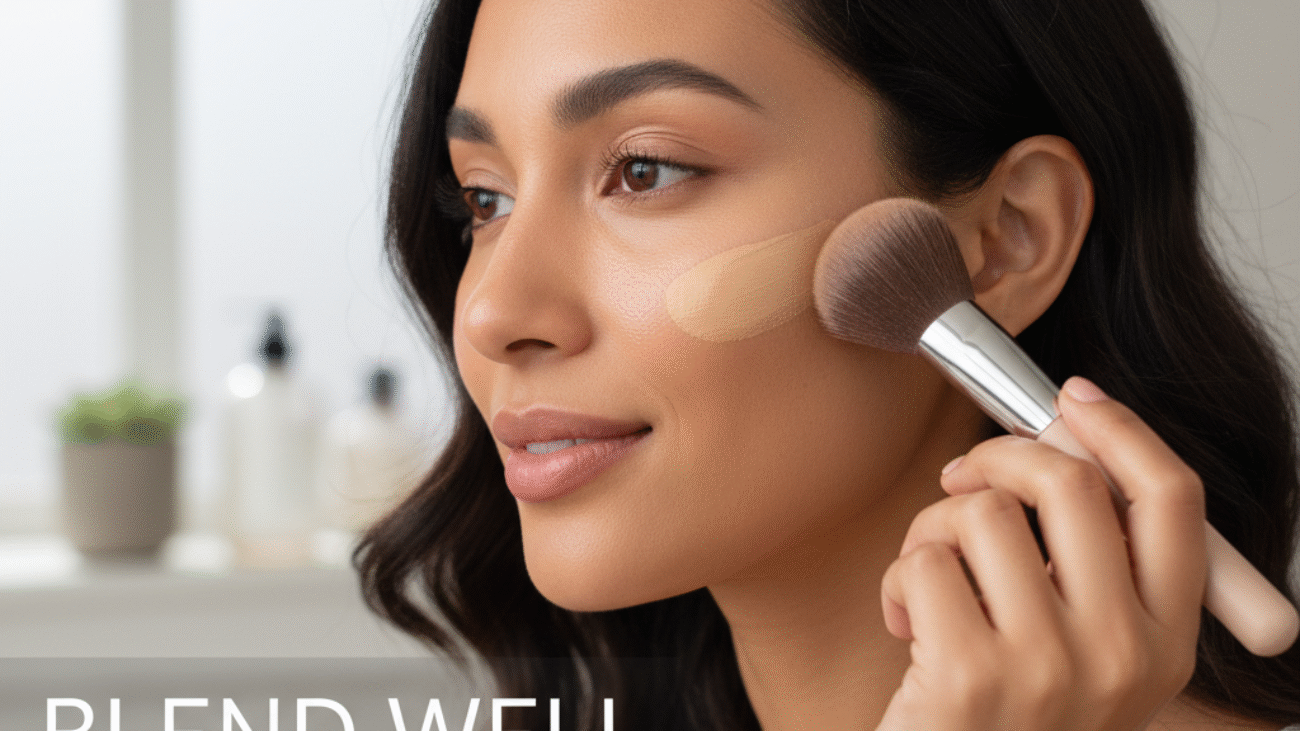
Quick Picks – Best Foundation Application Techniques for Every Skin Type
Best Method for Oily Skin
For oily skin, choose oil-free, mattifying liquid or powder foundations with a matte or natural finish. Prep with an oil-controlling moisturizer and primer first. Use a brush to apply for full coverage, or a damp sponge for a softer, more airbrushed effect. Set only the T-zone with translucent powder to reduce shine and extend wear. Experts recommend applying foundation in thin, strategic layers on textured or porous zones to avoid heaviness and caking.
Recent market trends indicate the growing popularity of mattifying formulas in Asia-Pacific, signaling high satisfaction among users with oily skin.
Best Method for Dry Skin
For dry skin, opt for hydrating, luminous-finish foundations (look for dewy or satin descriptors) to combat dullness and avoid flakiness. Always start with quality moisturizer, and consider a hydrating setting spray before foundation. Fingers or a damp sponge help blend product for maximum hydration and seamless finish. Preparation is crucial: well-moisturized skin ensures smoother, longer-lasting results.
Best Method for Combination Skin
Combination skin benefits most from buildable coverage foundations with a balanced, natural finish—these hydrate dry areas while resisting oil in the T-zone. Apply primer tailored for combination concerns, use a damp sponge for best blending across varying skin zones, and set powder only where needed (typically the forehead, nose, and chin).
Fastest Everyday Technique
For speed, fingers offer the quickest blend and natural finish, ideal for light foundation and on-the-go routines. A damp sponge comes next, providing an airbrushed look in under a minute. The fastest professional sequence: moisturize, prime, apply thin layers of foundation, blend, and lightly set as needed—totaling 30–60 seconds when practiced.
The Science Behind Foundation Application
How Foundation Works on Different Skin Types
Foundation’s adhesion is driven by surface energy matching between skin and cosmetic. Human skin has low surface energy (30–40 mJ/m²), while foundations often measure 50–65 mJ/m². Well-formulated oil-in-water (O/W) foundations, especially those with amphiphilic ingredients, bridge this mismatch through Van der Waals interactions—creating a more stable, even film. Pretreatment with specific primers further enhances foundation affinity, reducing fragmentation and wear by up to 33% in artificial motion-simulated skin studies.
Choosing the Right Formula for Your Needs
| Skin Concern | Recommended Formula Traits | Evidence-Based Rationale | Quantified Benefit |
|---|---|---|---|
| Oily Skin | Matte, high-polymer O/W, silica absorbents | Minimizes oil/foundation aggregation and shine | 33% less fracture area in lab tests |
| Dry Skin | Hydrating O/W, humectants (e.g., glycerin) | Improves product uniformity and moisture | Even, thin layer vs. patchiness |
| Combination Skin | Silicone-based hybrids, targeted prepping | Balances moisture/oil across regions | Reduced wear by 33% in simulated tests |
| Sensitive/Mature Skin | Minimalist, collagen-mimetic additives | Supports gentle adhesion and smoothness | Collagen aids surface hold (in vitro data) |
To optimize, apply primer 20–30 minutes before foundation for best adhesion, especially for oily/combination skin.
Step-by-Step Guide: Best Way to Apply Foundation Like a Pro
Essential Prep: Cleansing, Moisturizing, and Priming
- Cleanse: Remove dirt and excess oil with a gentle cleanser.
- Moisturize: Apply a suitable moisturizer, wait 1–2 minutes for absorption.
- Prime: Use a primer to create a smooth, tailored base (hydrating for dry skin, mattifying for oily skin).
Application Tools Compared – Fingers, Brushes, Sponges, and More
- Fingers: Offer warmth for blending, ideal for a natural or dewy finish.
- Brushes: Provide coverage and precision, especially for textured or larger areas.
- Damp Sponges: Deliver sheer to medium coverage with airbrushed effect; most popular for quick, seamless blending (consumer preference in prior surveys).
- Other Tools: Dual-ended brushes or stipplers customize finish and blending.
Blending with a damp sponge is favored by experts for most skin types and forms—balancing time, coverage, and finish.
Building Coverage: Sheer, Medium, and Full Explained
- Sheer: Use fingers/sponge, single thin layer. Skin shows through, evens tone.
- Medium: Build gradually in small sections, blend outward, use brush or sponge.
- Full: Repeat thin layers, let each set before next application. Target only where needed (nose, chin, blemishes) to avoid heaviness.
Blending Strategies for Seamless Results
- Start at the center of the face (forehead, nose, chin), blend outward to the jaw/neck.
- Always pat with sponge or brush—never drag.
- Warm products in hand (for creams/liquids) before application for even blending.
- Check in natural light to ensure a streak-free, skin-like finish.
Pro Tips from Celebrity Makeup Artists
Expert Do’s and Don’ts for Flawless Foundation
- Do:
- Prep with hydrating essence or moisturizer foundation for “cloud skin.”
- Mix foundation with moisturizer or face oil for a lighter, more radiant finish.
- Add loose setting powder to liquid foundation for mousse-like, longer-lasting matte result.
- Use a damp sponge to apply in thin, buildable layers.
- Always custom-match your foundation shade and blend multiples as pros do.
- Don’t:
- Avoid applying too much at once; this leads to cakey, heavy appearance.
- Don’t skip prep—especially for dry or mature skin, as product will emphasize texture.
- Avoid applying heavy powder over dry skin as it accentuates flakes.
- Do not guess your shade—test, let formulas set, and potentially consult digital scanners for guidance.
Common Foundation Mistakes and How to Fix Them
| Mistake | Why It Happens | Pro Fix |
|---|---|---|
| Cakey/Heavy Foundation | Too much product or skipped prep | Thin layers, mixed with moisturizer/essence, apply with sponge |
| Short-wear/Shiny Finish | Oily skin or insufficient grip | Mix setting powder into foundation before applying |
| Poor Blending/Texture | Lack of hydration, wrong tools | Apply hydrating essence, blend with sponge/fingers |
| Wrong Shade | Poor matching, bottle color misleading | Use color theory tools, blend shades if needed |
Visual Guide: Foundation Application for Beginners
Infographic: Foundation Application in 5 Steps
- Prep Skin: Cleanse, moisturize, apply primer; wait for absorption.
- Dispense & Dot: Squeeze a pea-sized amount, dot on center of face.
- Apply with Tool: Pat with damp sponge, brush, or fingers—work from center outward.
- Build & Blend: Add layers as needed, use patting motion for seamless finish.
- Set Finish: Powder T-zone if oily, check in natural light for even glow.
For full visual guidance, see these standout beginner-friendly videos:
- Pro Makeup Step-by-step Tutorial
- Pro’s Guide to Flawless Foundation
- Smooth Foundation Secrets (2025)
- Foundation for Beginners with Brush/Esthetician Tips
Foundation Application for Special Concerns
Covering Redness and Acne
While new large-scale post-2022 studies are lacking, best practice remains: start with green-tinted corrector on redness, then layer high-coverage, buildable foundation (preferably with non-comedogenic claims) only where needed. Pat with fingers or brush for pinpoint coverage, then blend edges with sponge. Finish with targeted concealer and a setting spray to prevent transfer.
Long-Lasting Foundation for Active or Humid Days
Choose sweat-resistant, transfer-proof formulas, often labeled as “longwear” (brands like Estée Lauder Double Wear, Maybelline Super Stay). Apply over primer; mix setting powder directly into foundation for extra longevity as pros suggest. For very oily skin, oil-absorbing blotters and makeup-setting sprays (alcohol-free, suitable for sensitive skin) help seal results.
Foundation Tips for Mature Skin
Go for lightweight, hydrating, radiant foundations, avoiding matte or powder-heavy formulas as they may emphasize wrinkles. Prep with rich moisturizer and smoothing primer, apply with a damp sponge, and layer only where coverage is needed. For stubborn texture, try mixing a drop of oil into foundation, then press in with a sponge for a blurring effect.
Frequently Asked Questions About Foundation Application
- How do I find my perfect foundation shade?
- Test on jawline or neck, let formula set for several minutes to observe oxidation.
- Use in-store tools like Sephora Color IQ—but always confirm in natural lighting.
- Try multiple shades and blend if needed; online matchmakers like matchmymakeup.com help cross-reference brands.
- Which is better: brush, sponge, or fingers?
- Brushes often provide higher coverage and precision, sponges give natural, airbrushed finish, fingers work well for creamier formulas and quick blending.
- How do I set my foundation on dry skin?
- Choose moisturizing setting powders and finish with a dewy spray. Avoid heavy layers if skin flakes easily.
- Where is the best place to get help or purchase?
- Ulta is praised for rewards and assistance, Sephora for premium brands and in-store testers—both are best in-person for shade matching and returns.
Final Recommendations: Choosing Your Best Foundation Method in 2026
The best way to apply foundation is to tailor formula and technique to your skin type and personal needs. Prep well—cleanse, moisturize, prime. Apply in thin layers with the right tool (brush for coverage, sponge for seamless blend, fingers for natural finish). Experiment with mixing in moisturizer or powder for additional customization as professionals do.
For long-lasting and flawless coverage, match foundation surface energy to your skin’s needs using primers and formulation science. Always test shades in natural light and make use of in-store or online resources for best results. For hands-on learning or visual demos, browse up-to-date professional video guides.
Ready to find your match? Shop top-rated foundations at Sephora or explore Ulta’s latest selections and start experimenting with pro-approved techniques today!