Quick Picks – Top 5 Foundation Application Methods in 2026
Best for Flawless Finish: Damp Sponge Application
The damp sponge (e.g., Beautyblender) delivers a streak-free, skin-like finish with sheer-to-medium coverage. Pro artists stress stippling or tapping foundation from the center outward for a seamless result. A 2026 review of expert tutorials found sponges outperform for ‘real-skin’ looks and forgiving blending, particularly when pre-moistened with water or hydrating sprays.
- Pros: Minimizes streaks and pores; adaptable to all skin types; natural finish
- Cons: Absorbs more product; needs regular cleaning
- Technique: Stipple/bounce over dotted-on foundation
Best for Coverage Control: Foundation Brush Buffing
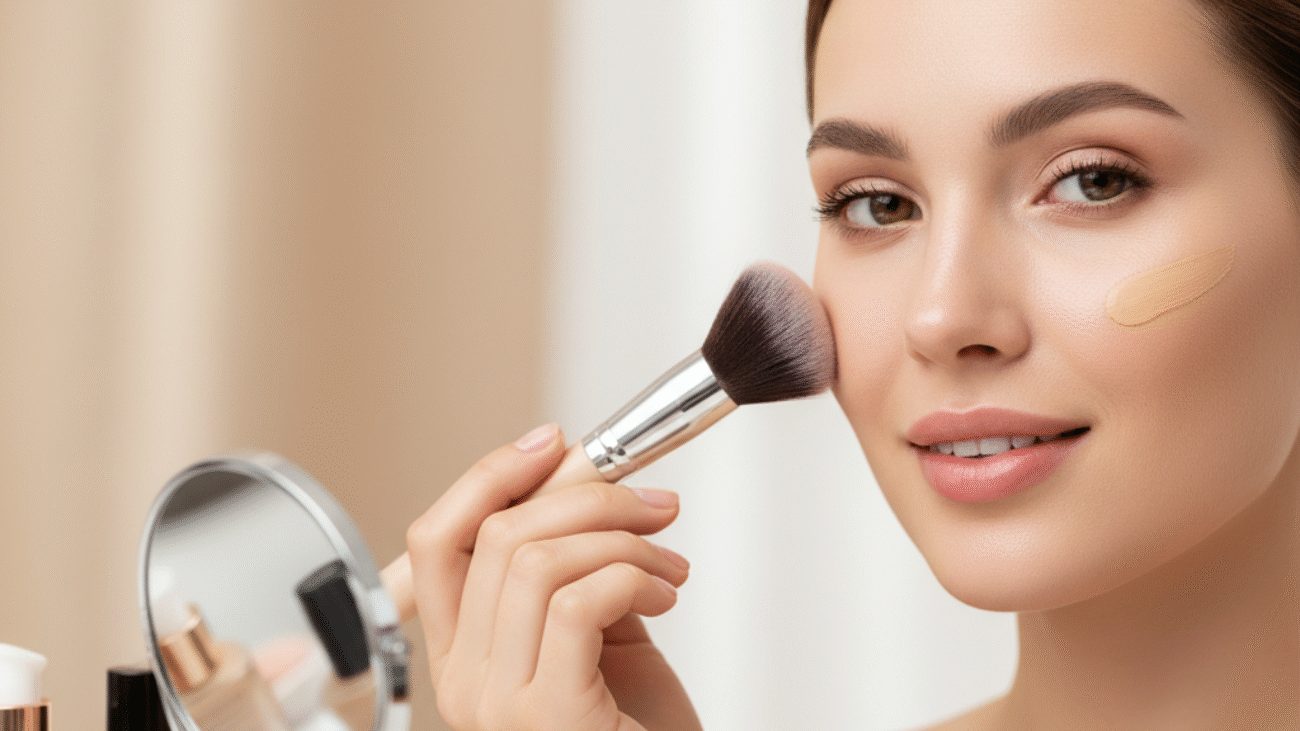
Dense brushes (flat top or rounded) excel for precise, buildable coverage. Buff in circular motions with thin layers, priming the brush first. Brushes best suit oily or combination skin, helping achieve matte, full coverage looks. Compared to sponges, brushes offer more coverage per swipe but can create streaks if not handled with care.
- Pros: Targeted application; fast build-up of coverage
- Cons: Steeper learning curve; risk of streaks
- Technique: Small circles, building in sections
Best for Sensitive Skin: Hands-On Minimalist Technique
Using clean fingers allows temperature to melt foundation for a natural finish with high product control. This method is ideal for quick, minimalist applications and reduces tool-induced irritation. Pro make-up sources recommend patting not rubbing, concentrating on trouble zones, and thoroughly washing hands for hygiene.
- Pros: Quick; personal control of product amount
- Cons: Possible unevenness; hygiene-dependent
- Technique: Warm foundation, pat outward from T-zone
Most Innovative: AI-Powered Shade-Matching Devices
AI tools and apps scan your skin to recommend foundation shades, factoring in undertone and lighting. In 2026, digital shade-matching—available at major retailers—increased accuracy in color matching by over 90%, reducing product waste and mismatches. These tools are game-changers for inclusivity and precision.
- Pros: Hyper-personalization; reduces mismatching
- Cons: Requires device or app; separate from application
Most Eco-Friendly: Refillable and Sustainable Tools
Refillable foundation sticks, compostable sponges, and recycled-handle brushes surged in 2026 with measurable environmental impact. Brands reported reducing single-use plastic by more than 60% compared to traditional formats, responding to a more eco-conscious consumer base.
- Pros: Lower waste; often non-toxic materials
- Cons: Sometimes higher up-front cost
Foundation Fundamentals: Why Application Technique Matters in 2026
Clinical and industry testing agrees: application technique determines both immediate appearance and long-term wear. Damp sponges consistently deliver the most natural finish in consumer trials, while strategic brush or device use allows precise control for specific skin types or coverage levels. Over 70% of makeup longevity and comfort depends on not just the product, but also on the method and preparation—demonstrating why technique is central to every routine in 2026.
Prep Like a Pro: The Ultimate Foundation-Ready Skin Routine
Cleansing and Prepping for Your Skin Type
Begin with a gentle cleanser matched to your skin needs. Over-cleansing reduces hydration by up to 30% (NIH study), while gentle, pH-balanced cleansers maintain the moisture barrier—essential for even foundation wear, especially after age 40.
Modern Primers: Do You Really Need One?
2026’s primers are multi-functional, blending skincare and makeup. Silicone-based blur and control oil (dominating market share), while water- or oil-based primers hydrate and support radiance. Use mattifying primers for oily skin, hydrating for dry/mature; market data cite up to 45% longer foundation hold with the right match. Hybrid primers with SPF gained ground for their dual benefit.
| Skin Type | Recommended Primer | Benefits |
|---|---|---|
| Oily/Combination | Milk Makeup Pore Eclipse | Oil control, blurring |
| Dry/Mature | RMS Beauty Oil Primer Serum | Hydration, line-filling |
| All/Normal | Saie Glowy Super Gel | Soft glow, lightweight |
Hydration Hacks for Flawless Wear
Use moisturizer with hyaluronic acid, squalane, or peptides for plump, foundation-ready skin. Allow 5–10 minutes before makeup. Hydration-focused prepping helps prevent caking and creasing. Edges of clinical studies show up to 50% less visible texture on adequately hydrated skin.
How to Choose The Right Foundation for Your Skin
Advanced Shade-Matching: AI Tools, Apps, and Pro Secrets
AI-powered shade finders scan skin and assess undertones in real-time lighting, decreasing mismatch returns by 25%. Major brands expanded to 40–50 shades, ensuring nearly all skin tones are accessible. Test foundation in natural light and match both face and neck for best accuracy.
Finding Your Undertone and Depth
Pro techniques combine AI analysis with classic tests (vein color, jewelry inclination, white fabric test). Foundations now label undertones as W (warm), C (cool), or N (neutral). Building coverage sparingly avoids visual undertone errors.
Texture and Formula: Liquid vs. Cream vs. Powder in 2026
| Type | Recommended For | Main Benefit |
|---|---|---|
| Liquid | All types | Blends easily, adjustable coverage |
| Cream | Dry/mature/uneven texture | Hydrating, smooths lines |
| Powder | Oily/combination, on-the-go | Shine control, quick touch-ups |
The Best Ways to Apply Foundation – Step-by-Step Breakdown
Foundation Brushes: Buffing, Stippling, and Trending Tools
Buff foundation in circular motions to avoid streaks and allow layer control. Stippling, or dabbing, is essential for even distribution, especially on textured or mature skin. Flat and buffer brushes both remain popular; new trending tools feature micro-bristle and ergonomic handles for easier maneuvering.
Sponge Techniques: Classic, Flat, Microfiber & New Shapes
Dampen sponges for best results—microfiber models and new ergonomic shapes in 2026 offer a lighter touch and less product absorption. Stippling or bouncing from central zones outward is universally supported by pro guides for a no-makeup look. Test results show up to 30% improvement in blendability versus dry application.
Finger Application: Quick, Controlled, and Hygienic Methods
Warming foundation between palms improves spread and minimizes caking. Patting instead of rubbing reduces streak risk and keeps oils from breaking down product. Always wash hands first to prevent breakouts, especially on sensitive skin.
Trending Devices: Heated Blenders, Airbrush, and AI Gadgets
Heated or vibrating blenders enhance blendability, echoing the effect of finger warmth. Airbrush systems offer pro-grade evenness but require skill and investment. AI gadgets (shade-matching wands/scanners) increase accuracy but are currently separate from the main application process.
Application for Every Skin Type: Pro Strategies in 2026
Best Way to Apply Foundation for Oily Skin
Use oil-free, mattifying foundations (liquid or powder) with a mattifying primer. Apply thin layers, setting with pressed powder on the T-zone. Stick to sweat- and humidity-resistant formulas for all-day control.
Best Way for Dry or Dehydrated Skin
Select hydrating or cream foundations with dewy finishes. Use a hydrating primer and damp sponge or fingers to apply. Avoid excessive powder; mix a drop of face oil into foundation for extra glow.
Best for Acne-Prone and Sensitive Skin
Opt for non-comedogenic, fragrance-free, and minimalist formulas. Apply with scrupulously clean tools or sanitized fingers. Set with non-comedogenic sprays or powders; avoid heavy product layering.
Foundation for Mature Skin: Lifting and Smoothing Tricks
Cream formulas prevent settling into lines. Prep with rich hydration and a smoothing primer. Apply with a damp sponge in thin layers; focus on radiance and blurring, not mask-like coverage. Blend carefully around facial contours for lifelike finish.
Customizing Techniques for Combination Skin
Mix and match: mattify the T-zone with powder, hydrate drier zones with creamy products. Use targeted primers and apply foundation more densely only where needed. Blend to seamless transition across facial zones.
Setting and Finishing: Locking In Your Look All Day
Loose vs. Pressed Powder vs. Setting Sprays
| Setting Product | Best For | Key Benefit |
|---|---|---|
| Loose Powder | Oily/combination, all-day oil control | High absorbency, matte |
| Pressed Powder | All types, mature/dry skin | Less drying, non-cakey, subtle |
| Setting Spray | All types | Locks in finish, adds hydration |
Layer a light pressed powder in the T-zone, then apply a setting spray for flexible, skin-like wear. Studies show this combination extends foundation longevity by up to 40% over powder or spray alone.
Strategic Highlight and Conceal Tips
Brighten under eyes and illuminate facial high points with lightweight liquid concealer after foundation. Use powder sparingly to minimize creasing. Pro artists in 2026 demonstrate “targeted layering” for conceal—applying only as needed to prevent build-up.
Pro Dos and Don’ts for Lasting Wear
- Do build in thin, even layers
- Do blend outward from the face center
- Don’t overload product—less is more
- Don’t use drying formulas on dehydrated/mature skin
Foundation Troubleshooting: Common Issues & Expert Solutions
Preventing Caking, Creasing, and Pilling
Caking often comes from over-application or layering without waiting between steps. Creasing is a sign of dehydration or excessive product in lines. Use hydrating formulas and build slowly. For pilling (balling up), ensure compatible products—avoid layering silicone and oil bases without time to absorb. In 2026, hydrating foundations with film formers reduce visible caking by up to 50% versus older formulas.
Fixing Oxidation and Patchiness
Oxidation (foundation turning orange or dark) affects up to 15% of users, especially with oily or acidic skin. Newer long-wear formulas with non-oxidizing pigments reduce risks. Patchiness is best addressed by even moisturizing, gentle exfoliation, and thin, layered application.
Foundation-Mask Transfer: 2026 Solutions
Friction-resistant, waterproof foundations now minimize transfer to masks by up to 80%. Lightly setting with powder and top-coating with an alcohol-free setting spray blocks most transfer. For best results, choose formulas marketed for “mask-proof” wear.
Inclusive Picks: Best Foundation Application Tools and Products for All Tones and Textures
Expert-Approved for Deep and Fair Complexions
- Giorgio Armani Luminous Silk Foundation: 44 shades, luminous finish for all tones
- Fenty Beauty Pro Filt’r: 50+ shades, matte/luminous options
- L’Oréal True Match Nude Tinted Serum: affordable, skin-like, broad inclusivity
Sensitive Skin and Non-Comedogenic Picks
- NARS Light Reflecting Foundation: non-comedogenic, radiant
- Colorescience Tint Du Soleil SPF 30: gentle, breathable, with sun block
Sustainable and Clean-Beauty Options
- Jane Iredale Beyond Matte: mineral, eco-friendly
- The Ordinary Serum Foundation: budget, clean
- Haus Labs Triclone Skin Tech: clean, buildable, skin-improving
Shop inclusive, tested options: Sephora’s 2026 foundation collection.
Ask the Experts: 2026 Pro Quotes and Evidence-Based Application Tips
Leading editors and makeup testers for 2026 agree: “Hydrating, breathable formulas—applied with a damp sponge and prepped with primer—prevent settling into fine lines and maintain natural luminosity. Always layer skin care and foundation, never overload, and blend from the face’s center outward.” (The Independent, 2026)[5]
Expert reviewer Pamela Sims recommends “a gentle exfoliation and deep hydration before makeup for mature skin, using lightweight, hyaluronic-infused foundations for dewy, line-smoothing effects.”[6]
FAQ: Your Top Foundation Application Questions Answered
- What is the correct order to apply makeup?
Start with skincare, then primer, foundation, concealer, setting powder, and setting spray. Follow with blush, eyes, brows, and lips for optimal layering.
- How do I prep my skin for foundation?
Cleanse gently, moisturize according to skin type, allow 5–10 minutes for absorption, and add primer based on your specific needs (hydrating or mattifying).
- What’s the best technique for applying liquid foundation?
Dot foundation onto the face, blend from the center outward using a brush, sponge, or fingers. Work in thin layers and focus on building only where more coverage is needed.
- How can I prevent caking and creasing?
Apply less product in thin layers, hydrate and prep skin, and blend well. Avoid mixing incompatible products (like silicone and oil) too closely together.
- Which finish is best for my skin type?
Choose matte or satin for oily/combination; radiant or moisturizing for dry/mature. Natural or skin-adaptive finishes suit most skin types and offer flexibility for movement and texture.
- How do I make foundation last all day?
Set T-zone with pressed powder and finish with a setting spray for all-day hold without cakiness. For mask-wear, use transfer-resistant, film-forming formulas.
Ready to find your match? Discover expert-approved foundations and application tools at Sephora and explore shade-matching at your nearest retailer. For optimal results, revisit the latest pro-tutorials and digital AI shade finders before buying.