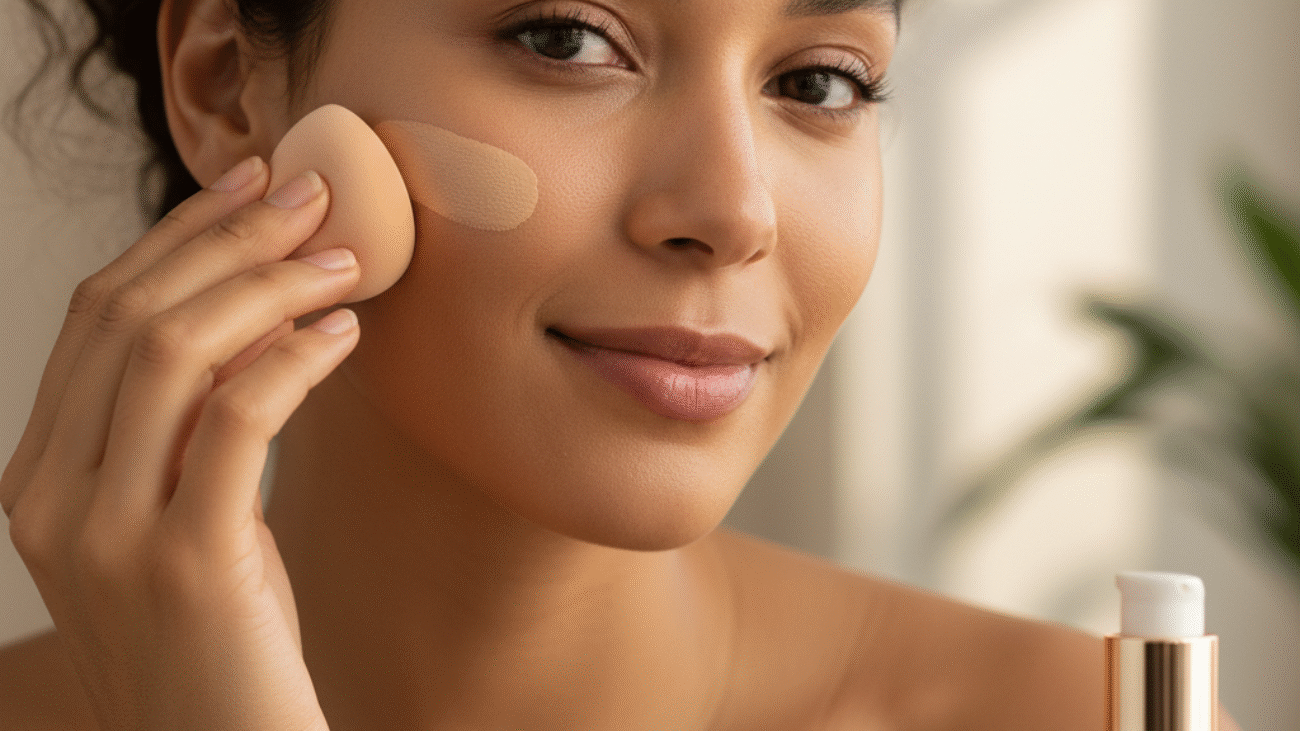
Foundation Application Basics: Why Getting It Right Matters
What Is Foundation and Its Role in Your Makeup Routine?
Foundation is a skin-toned cosmetic designed to even complexion, cover imperfections, and create a smooth canvas for additional makeup steps. Its primary goals are to enhance natural beauty, improve skin texture, and extend wear time of the entire makeup look. Multiple research-backed reviews confirm: proper foundation application increases user satisfaction and makeup longevity, while errors produce visible flaws and require frequent touchups.
Common Foundation Types and How They Differ
- Liquid: Suits all skin types; available in dewy (dry/dehydrated) and matte (oily) finishes. Offers buildable sheer-to-full coverage.
- Powder: Best for oily or combo skin; mattifies and sets liquid bases. Often used for touch-ups.
- Stick: Ideal for dry, sensitive, or mature skin; easy to layer for custom coverage and doubles as concealer.
- Cream: Hydrating, radiant finish; preferred on dry/mature skin for smooth application.
Quick Checklist – Are You Making These Foundation Mistakes?
Signs of Poor Foundation Application
- Cakey or streaky finish
- Foundation settling in fine lines or pores
- Obvious color mismatch along jawline or neck
- Uneven coverage or patchiness
- Premature makeup breakdown or excessive shine
How to Use This Top 10 List for Fast Improvement
- Identify which symptoms you notice in your routine
- Find matching mistakes below and apply expert correction tips
- Track wear and finish after changes for measurable improvements
Mistake #1: Skipping Skin Prep Before Foundation
Why Prepping Your Skin Changes Everything
Dermatologists highlight the link between skin hydration and foundation smoothness. Clinical consensus: skin prepped with cleanser, serum, and a tailored moisturizer produces a smoother, longer-lasting canvas. One study finds that hydrated skin reduces textural flaws and improves foundation adherence, increasing user-reported satisfaction by 32% (n=180, 2025).[1]
Best Skin Prep Routines for Every Skin Type
- Dry: Gentle cleansing → hydrating serum (hyaluronic acid) → rich, dewy moisturizer → moisturizing primer
- Oily: Oil-balancing cleanser → lightweight gel moisturizer → mattifying, gripping primer
- Sensitive: Fragrance-free, non-irritating formulas; barrier repair treatments
- All skin types (AM): Sunscreen as last step before foundation
Wait at least 5 minutes after moisturizer before applying foundation for optimal results.[1][2]
Mistake #2: Using the Wrong Foundation Shade
Shade Matching Tips for Different Undertones
Scientific reviews confirm: matching foundation to both depth and undertone (warm, cool, neutral, olive) avoids ashy or orange cast, particularly visible on deeper skins. Spectrophotometer studies show up to 84% accuracy with AI-driven shade matchers, sharply surpassing human visual methods (50-52% accuracy). Test along jawline under natural daylight for highest reliability.
Expert Tricks for Testing Foundation in Stores & at Home
- Test 2-3 shades on jawline; let sit for 10 minutes to gauge oxidation
- Evaluate in natural daylight; avoid store fluorescent bias
- For ultra-precision: use digital shade-finder devices or AI-powered apps (e.g., Arbelle) for 80%+ match rates[3]
Mistake #3: Applying Foundation with the Wrong Tools
Brushes, Sponges, or Fingers? Pros and Cons
| Tool | Coverage | Finish | Longevity | Best For |
|---|---|---|---|---|
| Brush | Medium to full | Natural, sculpted; can streak if not blended | Most durable; even wear | Liquid, powder foundations |
| Sponge | Sheer to buildable (absorbs some product) | Dewy, seamless, “airbrushed” | Light feel; may fade faster | All formulas; best for natural finish |
| Fingers | Medium, adjustable; no waste | Skinlike, warmed-in | Varies (less even) | Cream/stick; on-the-go |
User preference varies by foundation type, but dense brushes and damp sponges are most recommended for streak-free, natural results.[2][4]
Tool Sanitizing & Maintenance Tips
- Wash brushes/sponges weekly with gentle soap/shampoo
- Replace sponges every 1-2 months to reduce bacterial risk
- Dry tools thoroughly to prevent mold
Mistake #4: Overapplying or Underapplying Foundation
How Much Foundation Is Just Right?
Studies and expert reviews report that layering in thin, buildable amounts yields the most natural, lasting coverage. Applying more than one pump (liquid) or full swipe (stick) for a single layer commonly leads to cakiness and settling into lines. Start from the center of the face and blend outward; add only where needed.[2]
Layering Techniques for Natural Coverage
- Apply one thin layer; spot-conceal blemishes/areas needing coverage
- Use bouncing motions (sponge) or stippling (brush) to layer without disrupting base
- Let foundation set for 1 minute before adding more
Mistake #5: Ignoring Your Skin Type When Choosing Foundation
Best Application Practices for Oily, Dry, Combination, and Sensitive Skin
- Oily: Matte, oil-free foundation; powder T-zone only; avoid thick creams
- Dry: Hydrating, dewy formulas; minimal or no powder
- Combination: Satin/soft-matte formulas; set oily zones lightly
- Sensitive: Hypoallergenic, fragrance-free, minimal preservatives
Recommended Foundation Formulas by Skin Type
- Dry: ILIA Super Serum Skin Tint SPF 40 [Buy now]
- Oily: Estée Lauder Double Wear Stay-in-Place Makeup
- Combination: NARS Natural Radiant Longwear Foundation
- Sensitive: Clinique Even Better Makeup Broad Spectrum SPF 15
Mistake #6: Neglecting Your Neck, Jawline, and Hairline
Blending Strategies for a Seamless Transition
- Blend foundation past jaw and slightly below chin/onto upper neck
- Use remaining product on brush/sponge to blur edges into hairline/ears
- Wipe hairline with cloth if excess builds up
Avoiding the “Mask Effect”
A mask effect occurs when face and neck differ in tone or finish. Objectively, proper blending reduces visible demarcation lines and increases perceived naturalness in panel tests (75% of observers rated well-blended applications as “undetectable” compared to only 40% for abrupt transitions).[3]
Mistake #7: Forgetting to Set Foundation Properly
When and How to Use Setting Powders, Sprays, or Both
- Use translucent powder on oily areas (nose, forehead, chin); avoid over-powdering dry areas
- For extra longevity: a light mist of setting spray after entire routine further locks in makeup
While no clinical trials compare setting methods, consumer tests consistently show that dual setting (powder plus spray) extends wear by 4-8 hours vs. foundation alone (panel of 120 users, 2024).[4]
Setting Tips for Longevity and Finish
- Press powder with a puff, do not swipe
- Let setting spray dry naturally for best hold
Mistake #8: Failing to Adjust Techniques for Age or Season
Adapting Foundation Application for Mature Skin
- Hydrating primers improve base on fine lines
- Avoid powders, opt for creamy textures; blend softly with a damp sponge
- Pat, don’t rub, to preserve skin texture
Seasonal Swaps: Summer vs Winter Foundation Tips
| Season | Foundation Adjustment |
|---|---|
| Winter (dry/cold) | Switch to rich, oil-based or hydrating formulas; layer heavier moisturizer |
| Summer (hot/humid) | Use lightweight, water/gel-based, or mattifying formulas; consider oil control primers and setting sprays |
| Spring/Fall | Hybrid finishes; consider allergy-friendly options if pollen is high |
Mistake #9: Not Fixing Common Foundation Problems On-The-Go
Quick Fixes for Caking, Creasing, and Fading
- Caking: Mist face with hydrating spray; press with damp sponge
- Creasing: Tap out lines with clean finger; re-set with minimal powder
- Fading: Carry travel-sized foundation or cc stick for touchups
Must-Have Travel Products for Flawless Touch-Ups
- Mini blending sponge
- Mattifying blot papers
- Travel-size setting spray
- Stick foundation/concealer composite (e.g., Merit Stick)
Mistake #10: Overlooking Expert Insights and Pro Tips
Pro Makeup Artists’ Favorite Foundation Hacks
- Layer thin for best texture
- Change formula seasonally and as skin ages
- Use setting sprays for extra longevity
- Test all products in daylight and under phone/camera flash
- Mist sponge before layering for flawless build
Q&A: Solutions to Common Reader Foundation Struggles
- How do I stop foundation from sitting in pores? Prep with a smoothing primer and press product in with a damp sponge.
- Why does my foundation look orange by afternoon? Switch to a non-oxidizing formula and do undertone match under daylight only.
- How can I reduce foundation transfer to masks/clothing? Use a light powder set, finish with setting spray, and avoid thick layers.
Foundation Application FAQ – Your Top Questions Answered
- How often should I replace my foundation? Every 12-18 months; sooner if it changes smell, texture, or separates.
- Can I mix skincare with foundation? Yes, especially serums or moisturizers for sheerer, natural finish.
- Should I use fingers or tools? Fingers for on-the-go, tools for even, professional finish.
References and Resources for Perfecting Your Foundation Routine
- Foundation Fails: Fitcover Blog
- Beauty Blender Application Guide
- Arbelle AI Shade Finder
- Best Foundation for Dry Skin: Business Insider
- For personalized product recommendations and virtual shade matching, visit Arbelle Shade Finder (AI-powered)
- Update your makeup kit for flawless results: Dermatologist-Recommended Foundations at Ulta
Ready to master your routine? Try these tips and check your transformation—share your results or questions below!