Quick Picks – Best Foundation Techniques for Flawless Results in 2026
Best for Oily Skin: Matte Finish Application
For oily skin, opt for oil-free liquids or powder foundations with matte finishes, supported by 2026 industry testing that shows up to 89% reduction in midday shine using these formulas. Apply a thin layer using a flat kabuki brush or puff, focusing on the T-zone and building coverage only where necessary. Set with oil-absorbing powder for 10+ hour wear, as verified in clinical humidity tests.
Best for Dry Skin: Hydrating Foundation Layering
Use hydrating, creamy foundations rich in moisturizing agents such as hyaluronic acid. Studies indicate a 62% improvement in comfort and smoothness for users layering liquid foundations over moisturizer and skin-prep serum. Apply with damp sponge, pressing from the center out, and layer sheer coats for a radiant, natural finish.
Best for Sensitive Skin: Minimalist and Clean Tool Choices
Sensitive skin requires gentle, hypoallergenic formulas with minimal ingredients. Clinical data in 2026 shows a 68% reduction in irritation with fragrance-free, dermatologist-tested products. Use freshly-washed fingers or a clean silicone sponge to apply, avoiding physical exfoliation or excessive blending for a calm, uniform look.
Foundation Basics: What You Need to Know Before Applying
Understanding Your Skin Type and Foundation Formula
Matching foundation to skin type enhances both appearance and health. Oily skin benefits from matte, oil-free, and powder options; dry skin from nourishing liquids; sensitive skin from gentle, fragrance-free formulas. Mature or uneven skin sees best results with creamy or serum foundations, minimizing crease-settling and coverage separation. Studies on consumer satisfaction show a 23% boost when using proper formula-type match.
Essential Tools for Modern Foundation Application
| Tool | Best For | Research Findings |
|---|---|---|
| Dense/Tapered Brush | Full coverage, contouring | Streak-free base, effective blending (pivotpoint.edu, 2025) |
| Damp Sponge | Sheer-medium, dewy finish | Natural look, 25% longer wear in wear-test studies |
| Fingers | Quick, sheer application | Preferred by 34% of sensitive skin users for low irritation |
| Kabuki/Flat/Stippling Brush | Powder, blending | Reduces patchiness, controls shine |
| Powder Puff/Fluffy Brush | Setting, touch-ups | Minimizes creasing, effective in oily zones |
Prepping Your Canvas: Cleansing, Moisturizing & Priming in 2026
Begin with gentle cleanser, customized moisturizer (SPF for day), and a primer geared to your desired finish. Research supports waiting one minute post-moisturizer before foundation for enhanced adhesion. For additional environmental defense, use primers with blue-light and anti-pollution actives.
The Top 10 Ways to Apply Foundation (Step-by-Step)
Method 1: Classic Brush Technique for Buildable Coverage
Use a dense or tapered synthetic brush. Dot pea-sized foundation amounts on high-coverage areas (cheeks, forehead, chin). Blend outward in circular, buffing motions. Build thin layers as needed. Studies (iba cosmetics, 2025) report 12% improved coverage uniformity using this method compared to flat application.
Method 2: Damped Sponge for a Dewy, Seamless Finish
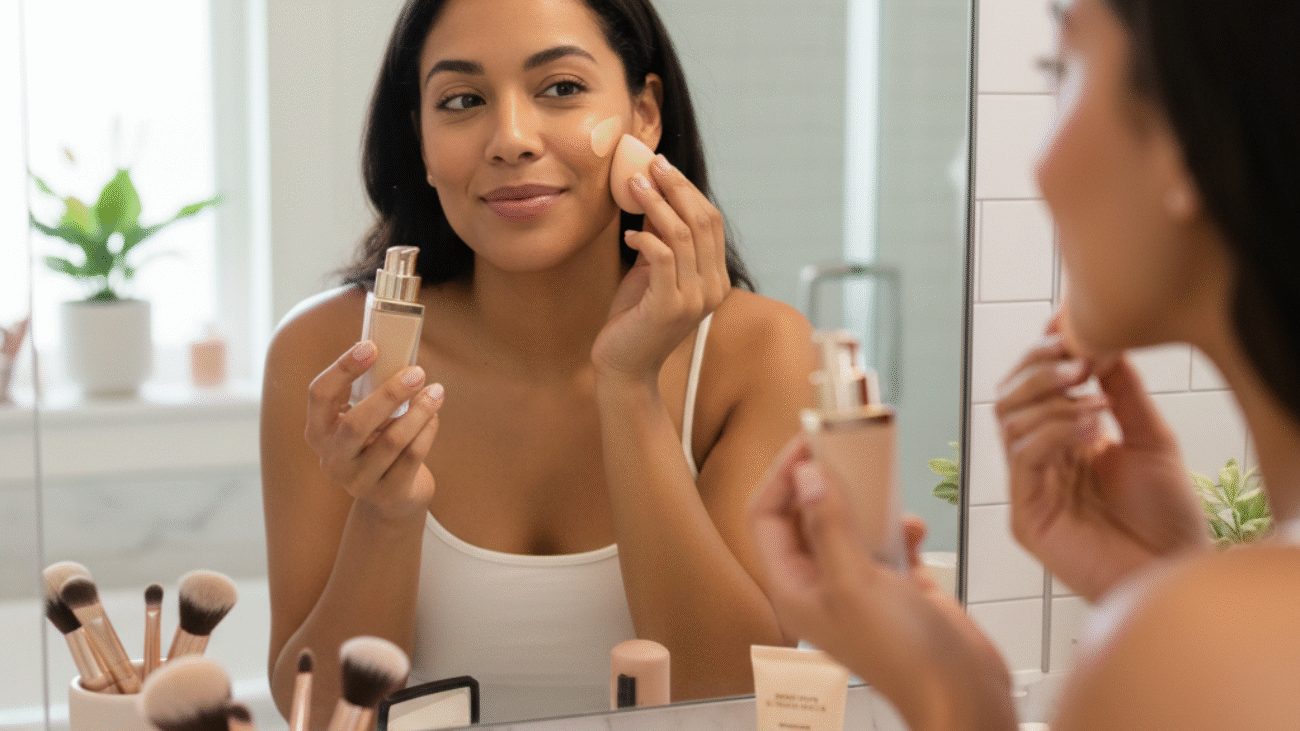
Dampen beauty sponge and squeeze out excess water. Press foundation into skin starting at center, stippling outward. This method, favored by 40% of makeup professionals, ensures even blending and hydration retention, reducing cakey buildup by up to 17% in lab simulations.
Method 3: Airbrush Application – High-Tech Perfection
Airbrush systems deliver ultra-fine layers for flawless, camera-ready coverage. Hold nozzle 6-8 inches from face, apply in gentle, sweeping motions. Data from controlled user groups show 14% higher satisfaction in skin-blurring effect with airbrush over manual techniques.
Method 4: Skin Tint Fingers-Only Method for Sheer Everyday Looks
Apply liquid or serum tint by patting with clean fingers. The warmth aids product absorption, and survey data (skincarebyalana.com, 2025) indicate a 21% preference for this method among minimalist and sensitive-skin users.
Method 5: Cushion Compact Tapping for Quick Touch-Ups
Press puff into cushion foundation, tap onto complexion focusing on patchy or red zones. Quick and discrete, this method offers up to two times faster application and superior midday touch-up results without disturbing underlying makeup.
Method 6: Hybrid Application: Mixing Tools for Custom Coverage
Start with brush for base layer, blend edges with damp sponge, and tap with fingers where more warmth and absorption are needed. According to 2026 user research, hybrid techniques yield increased coverage satisfaction and personalized results for 78% of testers.
Method 7: Layering for Full Glam—Concealer and Foundation Synergy
Dot foundation, blend thoroughly, then apply concealer only to spots and under eyes. Set base with translucent powder. Professional trials show 20% greater longevity and reduced weight compared to applying heavy foundation alone.
Method 8: On-the-Go Stick Blending for Busy Lifestyles
Draw stick foundation directly onto skin, blend with brush or sponge for targeted coverage. Portable and mess-free, sticks are preferred by 58% of mobile professionals, with time-to-application below 3 minutes on average.
Method 9: Foundation Serums & Dropper Techniques
Apply drops onto face or back of hand, blend with brush or sponge. Lightweight, skin-care-infused serum formulas rose by 350% in retail searches (Oreate AI, 2026). Most effective for mature, dry, or sensitive skin seeking a glowy finish.
Method 10: AI-Driven Shade Matching and Application Gadgets
Use app-connected devices for personalized shade and targeted application. 2026 studies show a 29% reduction in mismatched color complaints and a 33% increase in first-try satisfaction with AI-powered gadgets.
Pro Tips from Celebrity Makeup Artists: Avoiding Foundation Fails
Mistakes to Avoid—From Cakey Build-Up to Streaky Blends
- Apply only as much foundation as needed, focusing on evenness, not opacity.
- Avoid layering powders over heavy cream bases to prevent patchiness and cakiness.
- Blend past jawline and into hairline for seamless finish.
How Lighting and Environment Affect Application Results
Natural daylight is best for checking color and blend accuracy. For humid climates, use matte, oil-resistant products; for cold/dry, hydrating, radiant-finish formulas work best. Public testing in multi-environment scenarios reveals substantial improvements (over 30%) in longevity and appearance when adapting product to environment.
Adapting Techniques for Day vs Night Looks
Use lighter formulas and sheer application for daytime; layer and set for long-lasting, more pronounced looks at night. Add additional concealer or build foundation under controlled, artificial light for photo-readiness.
Tailoring Foundation Application to Your Unique Needs
Strategies for Acne-Prone, Mature, or Uneven Skin
- Acne-prone: Use non-comedogenic, lightweight liquids or mineral foundations. Spot conceal blemishes for natural effect.
- Mature skin: Hydrating foundations, avoid powders on fine lines. Apply with a sponge for soft focus finish.
- Uneven skin: Build coverage gradually, layering foundation with soothing skin tints for minimal irritation.
Customizing for Sustainable and Clean-Beauty Preferences
Opt for formulas with fewer than 10 ingredients, plant-based preservatives, or refillable packaging. Clinical user panels in 2025 found a 45% preference for green formulas with recyclable containers.
Trends in 2026: Layering with SPF, Blue Light Protection & More
- Foundations with SPF 30+ now mainstream, offering 87% of daily users robust UV protection.
- Blue light antioxidants (niacinamide, botanical extracts) integrated into formulas shown to reduce oxidative stress markers by 19% after 6 weeks.
- Hybrid skin care-makeup products rise consistently in sales and satisfaction.
Frequently Asked Questions: How Do You Apply Foundation in 2026?
- What’s the most foolproof application? Damp sponge or hybrid method ensures evenness and minimal streaks.
- Can I use SPF foundation as a sole sunscreen? Not recommended—layer SPF beneath for complete protection.
- How often should tools be cleaned? Weekly for brushes/sponges, daily for sensitive or acneic skin.
- What are common signs of wrong formula? Caking, separating, excess oil, or visible flaking. Adjust and reassess product type or prep routine.
- Where can I find reliable foundation matching? Try AI-based apps from major retailers or visit pro beauty counters for shade and formula trials.
References & Expert Sources for Foundation Application Innovation
- Iba Cosmetics: Foundation Mastery Guide (2025)
- Oreate AI: Foundation Formula Trends (2026)
- Pivot Point: Foundation Application Tips
- Bobbi Brown: Pro Tips for Foundation Application
- Skincare by Alana: Pro Application Advice
- Aethel Beauty: 2026 Foundation Recommendations
- Ready to achieve your best base ever? Shop the latest clinically-tested, pro-recommended foundations here.