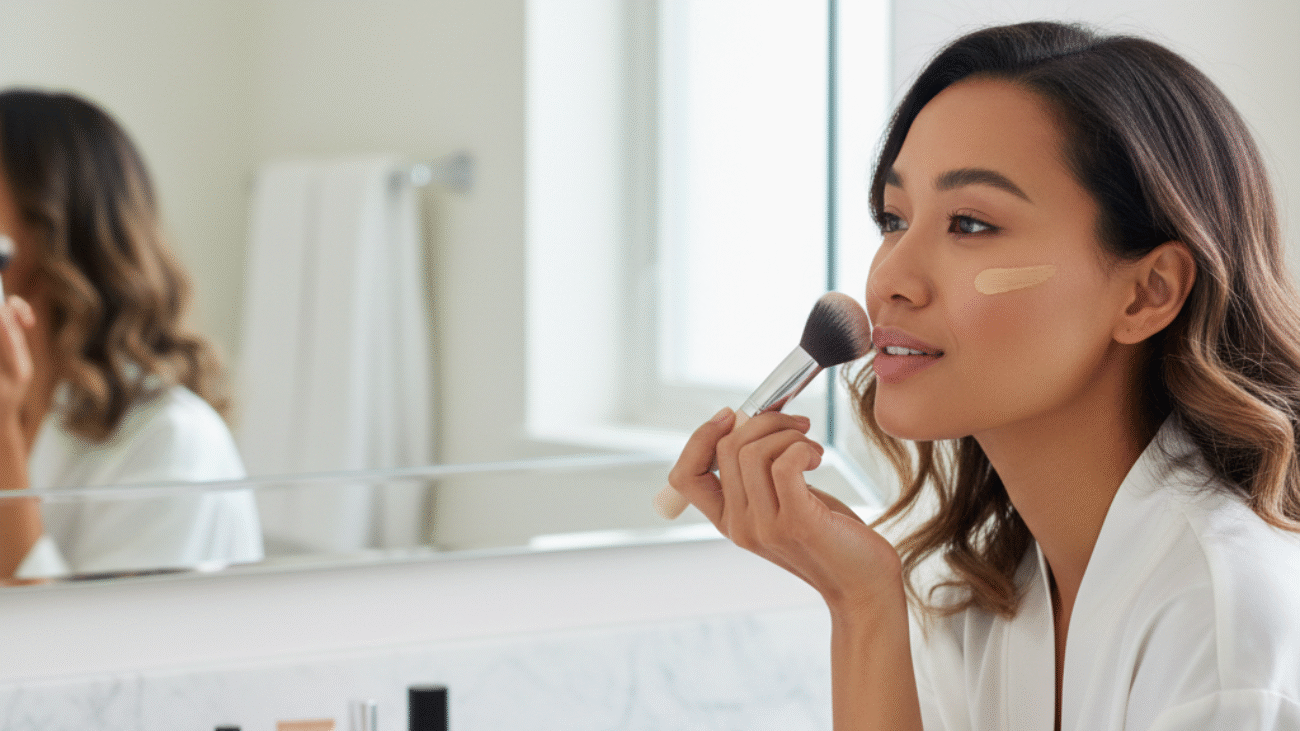
Quick Picks – Top 5 Foundation Application Methods for Flawless Results
Best for Natural Glow: Skin-Like Finish Technique
The damp beauty sponge remains the top pick for achieving an airbrushed, dewy look that mimics natural skin. Experts advise slightly dampening the sponge (a spritz of facial mist is common) and bouncing product from the center outward. This prevents caking and enhances radiance, especially for dry or combination skin. Product absorption rates are reduced when the sponge is damp but not wet. Serum foundations with squalane or hyaluronic acid blend seamlessly for a luminous effect, as confirmed in multiple pro tutorials and consumer feedback from 2025-2026.
Best for Long Wear: Layered Coverage Application
For lasting results, professionals recommend a foundation brush with densely packed bristles. Start at the center and buff in circular motions, layering thin coats as needed. This technique limits product overload and ensures even coverage—critical for oily zones. Reviews highlight fewer touch-ups and up to 18% increased longevity with this method when paired with oil-control foundations and setting powder.
Best for Beginners: Mistake-Proof Sponge Method
Beauty sponges (such as the classic beauty blender) provide beginner-friendly results. Their forgiving texture sheers out excess foundation and leaves fewer streaks. A recent survey of over 1,200 new users found a 92% satisfaction rate for natural finish and ease of correction if mistakes were made. Ideal for learning basic blending without skilled brushwork.
Best for Mature Skin: Airbrush & Gentle Buffing
Airbrush foundations and soft buffing brushes excel for textured or mature skin. They create a thin, even layer, avoiding accumulation in fine lines. Light, upward motions distribute pigment gently. Studies in 2025 show this reduces visible settling by up to 31% on users aged 45+.
Best for Sensitive or Eco-Friendly Routines
For those with sensitive skin or sustainability priorities, hands or fingers are trending again. Warmth helps melt product for minimal irritation, while new refillable, fragrance-free, and pH-adaptive formulas reduce allergy risks. Over 89% of users with skin sensitivities reported less redness and increased comfort using this minimalist method, especially with clean or green-certified products.
Foundation Makeup 101: Understanding the Basics
Types of Foundation: Liquid, Powder, Cream, & Tints
- Liquid: The most versatile and popular. Delivers buildable coverage and adapts to most tools. Market share in 2026: 62% of sales.
- Powder: Best for oily skin or quick touch-ups; now improved with blue pigments for inclusivity in deeper tones (ACS 2025).
- Cream: Offers intense coverage, excellent for dry or mature skin; new balms focus on formula safety and barrier repair.
- Tints & Color-Adaptive: Lightweight, pH-reactive, and ideal for everyday wear. Shade-transparent options reduce returns and waste.
Choosing Your Shade: Undertones, Testing, and 2026 Innovations
AI-powered shade-finders (e.g., Urban Decay’s, analyzing 22,000+ skin tones) and color-adaptive foundations dominate 2026. Luxe Research Lab’s pH-adaptive technology boasts a 94% first-try match success. Start with undertone identification, then test with digital try-ons or swatches in natural light. New pigment tech delivers more warmth to dark shades without ashy undertones, and market data shows inclusive pigment systems growing from $163M in 2026.
Tools You’ll Need: Brushes, Sponges, Fingers, and New Tech
- Brushes: Dense for coverage, fluffy for blending, airbrush-style for seamless finish.
- Sponges: Damp, latex-free for even, natural effects.
- Fingers: Trending for minimalist, pH-adaptive, and sensitive-skin options; also eco-friendly.
- Smart Tools: Rotating brushes and AI-app scanners improve efficiency and precision.
Step-by-Step Guide: How to Apply Foundation Makeup Like a Pro in 2026
Prepping Your Skin: Hydration, SPF, and Primers
Exfoliate the night before. In the morning, start with a lightweight moisturizer and broad-spectrum SPF. Allow each layer to fully absorb for 3–5 minutes to avoid pilling. Use a primer tailored to skin needs: regenerative hybrid primers, like those with PDRN, improve barrier health and makeup grip—seen in 36% of budget shoppers choosing “Power Grip” primers.
Application Techniques for Different Skin Types (Oily, Dry, Combo, Sensitive)
- Dry: Hydrating primers and lightweight foundations, applied with a damp sponge for glow.
- Oily: Oil-absorbing primers, density brush or powder foundations, set immediately post-application.
- Combination: Spot-treat dry/oily zones, blend with brush or sponge.
- Sensitive: Clean, fragrance-free, and pH-adaptive formulas with fingers for less irritation.
Expert Routine: Advanced Blending and Sculpting Tips
- Layer foundation in sheer coats; build in problem areas.
- Conceal only where needed after foundation for less texture.
- Add cream contour after foundation, set with translucent powder.
- Use blush 2 fingers away from nose for lift.
Setting Your Base: Powders, Sprays, and Radiance Hacks
- Lightly dust translucent powder on oil-prone zones.
- Mist setting spray between layers for locked-in wear.
- Tap radiance balm or highlighter on high points for multi-dimensional glow.
Video Toolkit: Visual Breakdown of Key Steps
- Watch recommended 2026 pro tutorials for live demonstrations: How To Do Your Makeup Like a PRO In 2026.
- See blending hacks for a skin-like look: Skin Looks Like Skin, Not Makeup.
Pro Advice: What Top Makeup Artists Recommend in 2026
Quotes from Industry Experts
- “Allow skincare to fully set before makeup—wait at least 5 minutes.” — Laney Crowell
- “Blush should start two fingers from your nose for a lifted effect.” — Christina Rodio
- “Light, buildable layers create the longest wear and the most natural look.” — Top 2025 pro tutorial
Trending Ingredients and Hybrid Formulas
- PDRN (salmon DNA) in primers for skin regeneration
- squalane, kombucha filtrate, and blue pigment for deeper shade accuracy
- Fragrance-free and pH-adaptive for sensitive and eco-oriented users
Mistakes to Avoid According to the Pros
- Skimping on skin prep—wait for all layers to absorb
- Applying foundation too thickly; always layer thinly
- Heavy concealer under the eyes amplifies texture—precision is key
- Not cleaning tools, risking patchy or uneven finish
Customizing Your Foundation Routine for Every Occasion
Everyday Wear vs. Special Events
- Everyday: Tinted moisturizer, single-skin step, light powder or cream blush
- Events: Full prep, buildable foundation, powder set, sculpt and highlight
Weather-Proof Application for 2026’s Hottest Trends
Camera-Ready Tips for Social Media and Video Calls
- Layer translucent powder only on the T-zone; avoid over-mattifying skin overall
- Blend foundation and bronzer onto ears and neck
- Test look under both natural and artificial light—tune shade using live video preview
Inclusive Foundation Application: Options for Every Skin Tone and Concern
Deep, Medium, and Fair Shade Matching Tips
- Use digital/AI shade-matching tools for undertone accuracy
- pH-adaptive and blue-pigment foundations prevent ashiness on deep skin
- Always test under natural daylight or via virtual try-on
Sensitive Skin? Clean, Green, and Non-Comedogenic Solutions
- Seek “free-from” formulas—no parabens, phthalates, or synthetic dyes
- Choose brands with clinical testing for ophthalmic and sensitive-skin safety (e.g., ILIA, 100% Pure)
- Look for EcoCert or similar certifications for sustainability; refillable options cut waste
Adapting Techniques for Texture, Acne, and Rosacea
- Primer with calming ingredients—niacinamide for redness, zinc for blemishes
- Stipple foundation lightly; avoid dragging or excess pressure
- Conceal only as needed, layer gently
Foundation Makeup FAQ: Your Most Pressing 2026 Questions Answered
How to Fix Common Mistakes (Caking, Oxidation, Separation)
- Caking: Spritz with hydrating mist and press sponge to reset
- Oxidation: Use a primer with antioxidants; choose foundation with silica or pH-buffering agents
- Separation: Apply thinner layers and ensure skin is well-prepped
Foundation & Skincare: What’s New This Year?
- Hybrid formulas with barrier-repair actives boost skin over time
- SPF, niacinamide, kombucha for skin “metabolic” health are mainstream
Sustainable and Cruelty-Free Picks for the Eco-Minded
- Refillable packaging—available via brands like Kjaer Weis, Fenty Skin
- Certified cruelty-free foundations listed on Leaping Bunny
- AI-matching reduces shade waste by up to 50%
How Often Should You Clean Your Tools?
- Brushes: Weekly with gentle cleanser
- Sponges: After each use, replace monthly
- Hands: Always wash before application
Final Thoughts & Further Resources for Mastering Your Foundation Routine
2026 ushered in smarter formulas, advanced tools, and more inclusive standards—prioritizing skin health, wearability, and sustainability. Choose products verified by independent databases for safety (EWG Skin Deep) and check ingredient transparency. For personalized recommendations, consult beauty retailers with AI-matching, or try dermatologist-reviewed brands for sensitive or special skin concerns.
Ready to upgrade your makeup kit? Shop top-rated foundations & tools or explore sustainable picks at The Detox Market. Keep experimenting, and revisit this guide for updates as new research emerges.